Deej Audio Mixer
A compact DIY desktop audio mixer built as one of my earliest mechatronics-related projects, introducing me to Arduino hardware, soldering, PCB assembly, and 3D printed electronics enclosures.
Project Overview
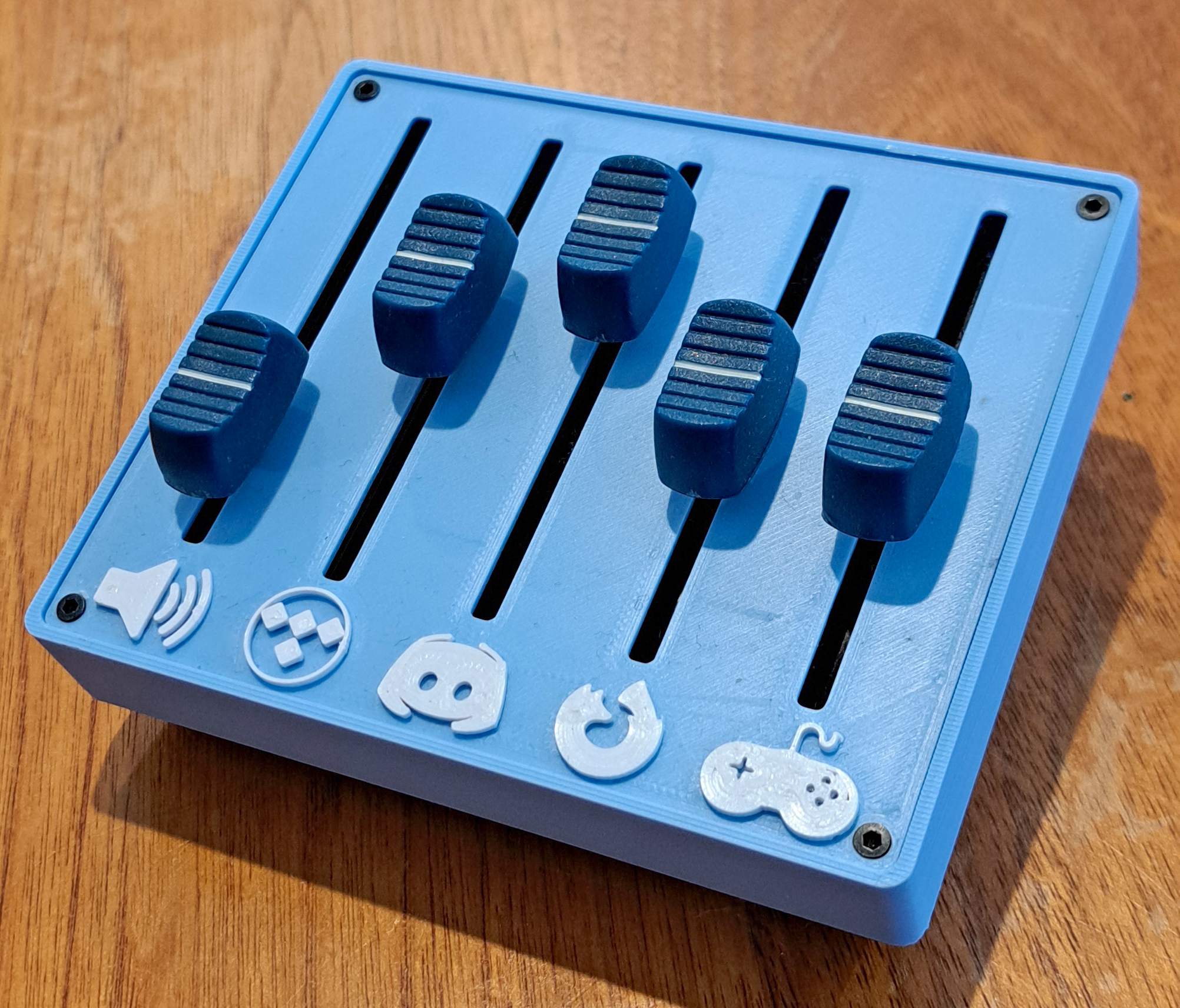
This audio mixer was one of my earliest mechatronics-related projects, completed before I began studying mechatronics engineering. It was built as a compact DIY desktop controller for adjusting individual PC application volumes using physical sliders.
The mixer provides a more tactile and convenient way to balance audio between applications such as games, music, voice chat, and system sounds without needing to open software volume menus. Although the project is small in scale, it became an important first step into hands-on hardware development.
Key Features
Design Basis and Credits
This project is not an original electronics design. My build is based on the open-source deej project by Omri Harel and the Ananords deej full-kit design.
I originally discovered the concept through a YouTube build video and used it as an opportunity to learn the practical skills involved in building a small hardware project, including Arduino setup, soldering, PCB assembly, enclosure fabrication, and final device assembly.
Key Features
- Five physical slider controls for individual PC audio channels.
- Arduino-based USB control using the open-source deej software.
- PCB-mounted slider potentiometers housed inside a compact 3D printed enclosure.
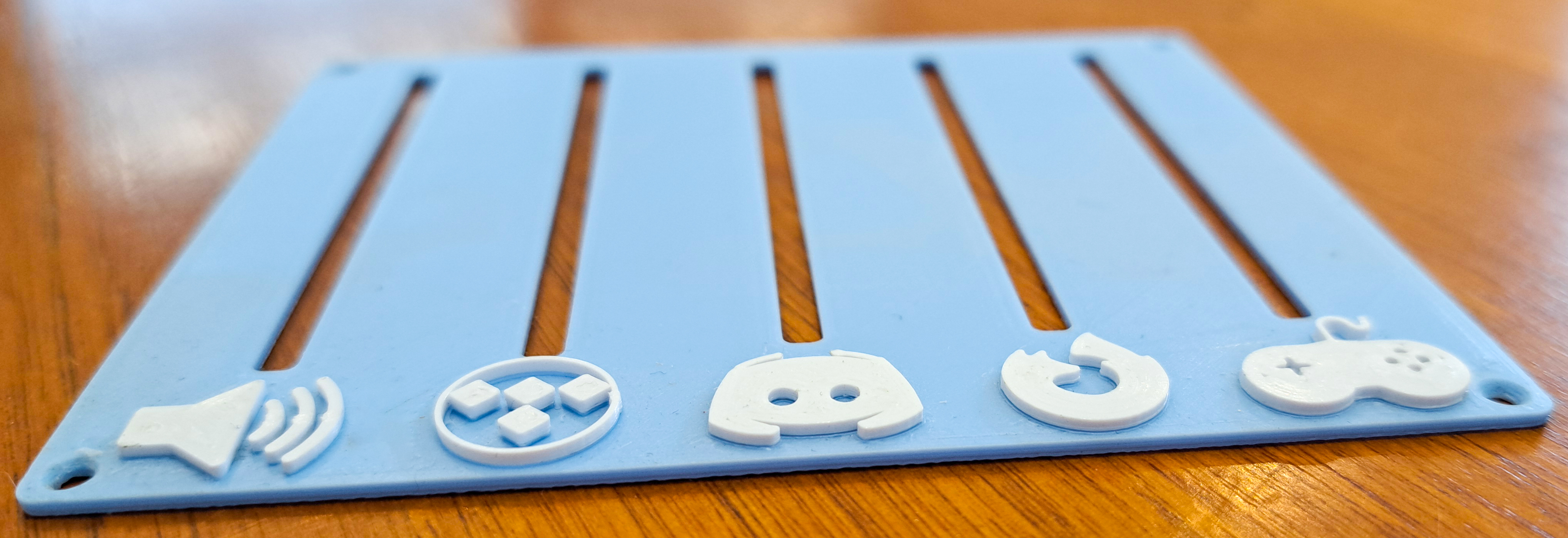
- Custom printed top panel with raised application icons.
- Two-colour FDM print created using manual filament changes.
Technical Development
Electronics Assembly
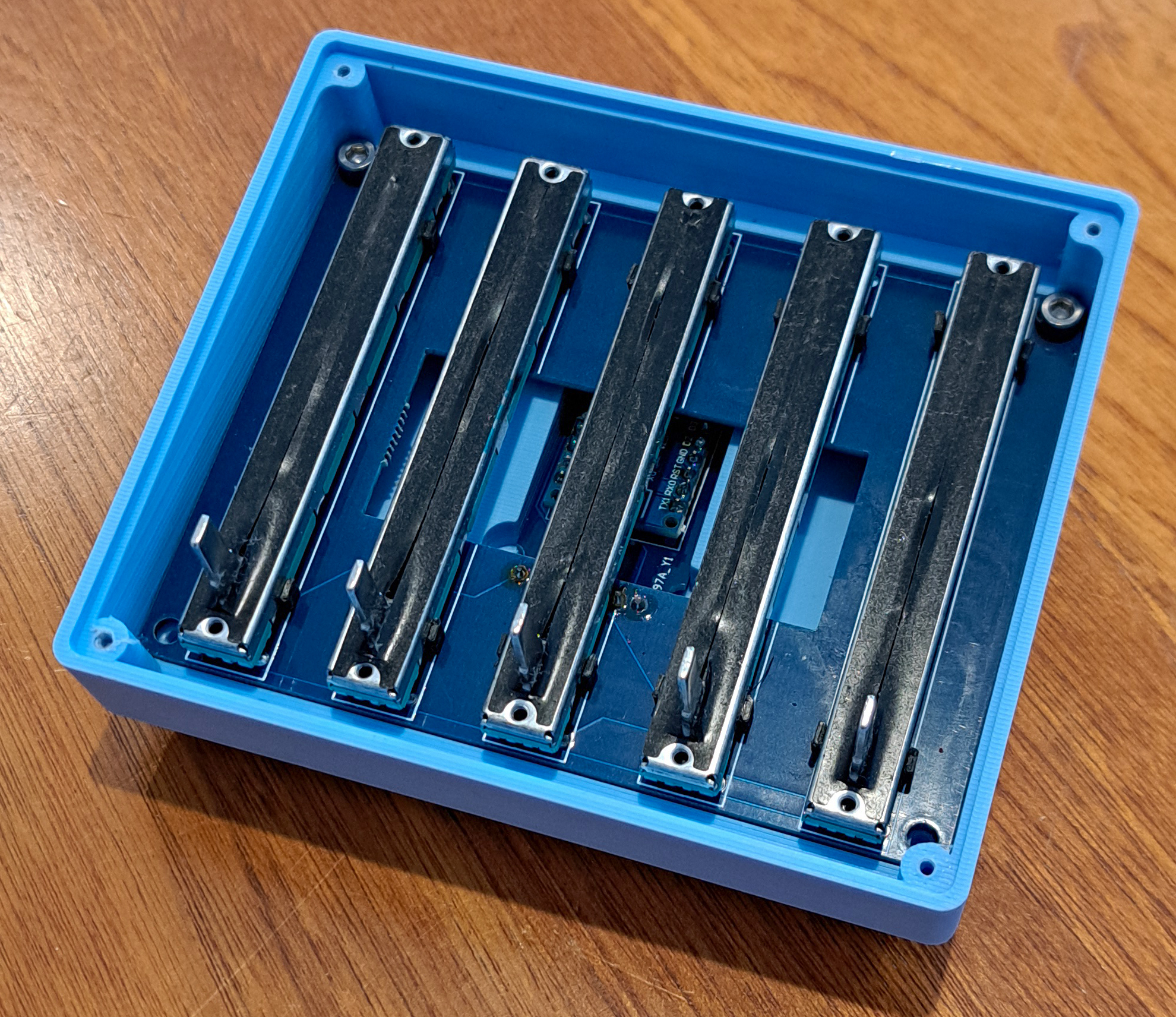
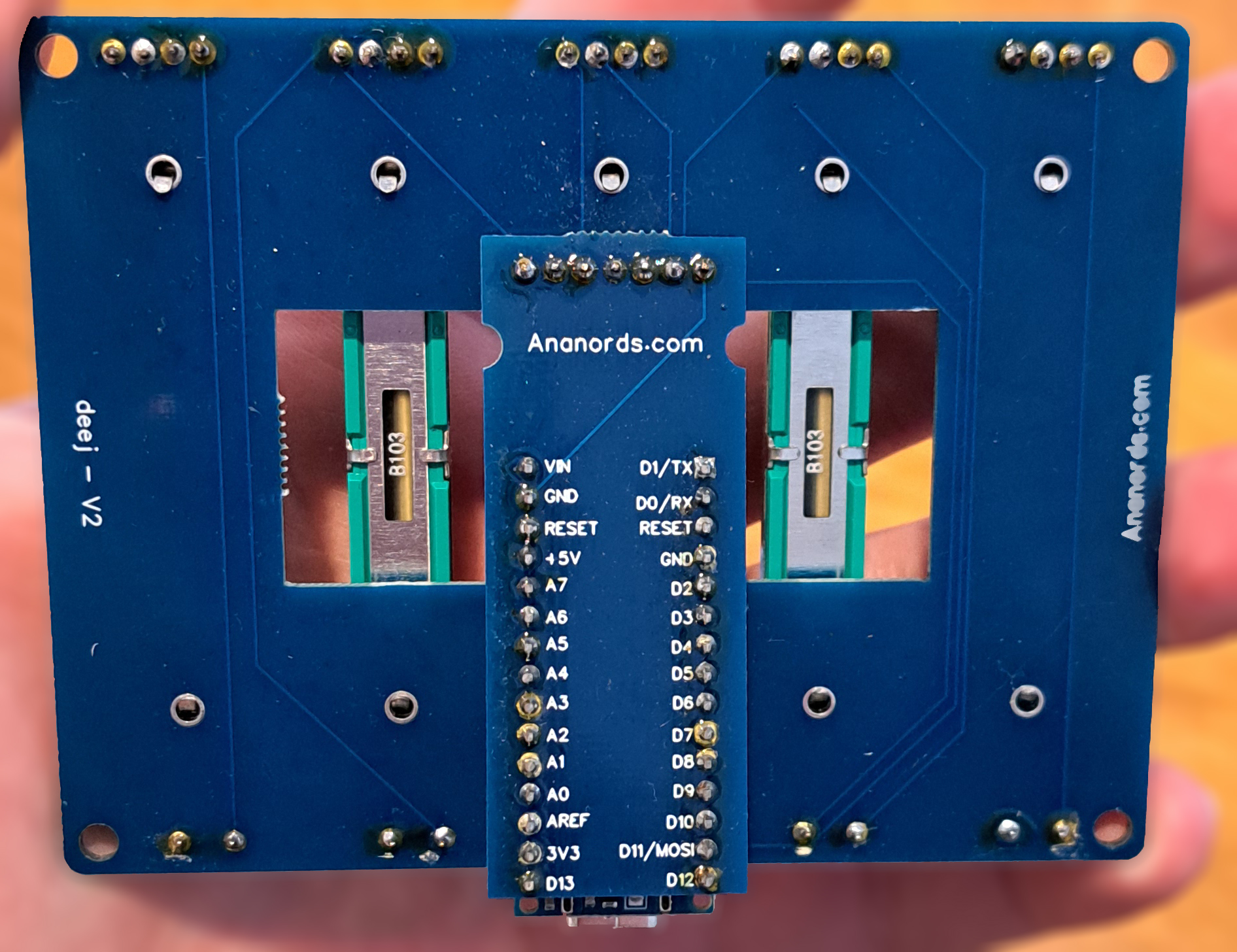
The electronics were assembled around an Arduino-compatible controller, sliding potentiometers, and a PCB based on the Ananords/deej hardware design. The potentiometers provide the physical slider input, while the controller communicates with the deej software running on the PC.
This was my first real exposure to soldering and PCB-based assembly. The internal layout also gave me an early understanding of how component placement, enclosure clearance, wiring access, and mechanical fit all need to be considered together when turning a circuit into a finished device.
3D Printed Enclosure and Two-colour Top Panel
The enclosure was fabricated on my older Ender 3 V2, which had been modified with BLTouch bed levelling and a belt-driven Z-axis upgrade based on KevinAKASam’s design. The printed enclosure gave the project a compact desktop form factor while keeping the sliders, PCB, and controller neatly contained.
The top panel was also my first attempt at printing two colours in a single part. While this is much easier with modern multi-material systems, at the time it required more manual setup, careful timing, and filament changes on the Ender 3 V2.
Project Outcome
The final result was a functional desktop audio mixer with physical controls for PC application volume. More importantly, it became my first practical introduction to Arduino hardware, soldering, PCB assembly, 3D printed enclosures, and small-scale electronics integration.
Looking back, the project is simple compared with my later engineering work, but it was an important starting point. It helped build my confidence with hands-on hardware and showed me how satisfying it was to turn a digital design into a working physical product.